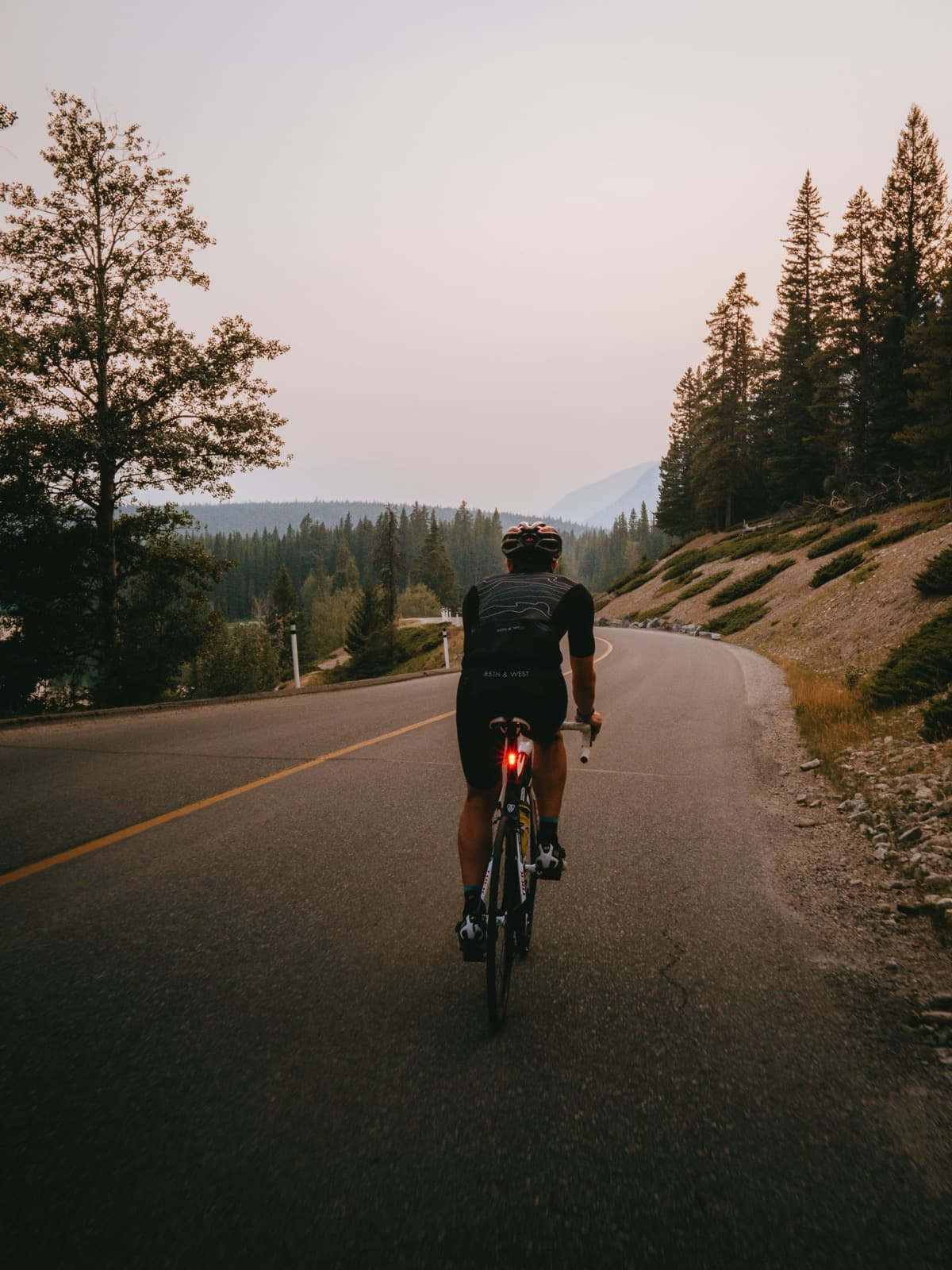
Every summer, the same thing happens to age-group athletes in Malta. The plan says four hours at endurance pace. The legs say something very different by hour two. Heart rate is fifteen beats higher than it should be, pace is slower than it was in April, and it is tempting to read all of that as lost fitness.
It usually isn't. It's physics.
What the heat is actually doing to you
When you train in the heat, your body has two competing jobs: deliver blood to working muscle, and deliver blood to the skin to dump heat. There is only so much blood to go around, so something gives.
The visible consequences show up quickly:
- Cardiac drift. Plasma volume drops as you sweat, so stroke volume falls and heart rate climbs to defend cardiac output. Same effort, higher heart rate, and a number on your watch that no longer means what it meant in winter.
- Higher perceived effort at the same power or pace. The work feels harder because, physiologically, it is harder.
- A real ceiling on high-intensity work. Threshold and VO₂ sessions are the first casualties. Core temperature climbs faster than you can shed it, and the session ends early whether you planned it that way or not.
Malta's particular difficulty is not the raw temperature — plenty of places get hotter. It is the humidity. Sweat only cools you when it evaporates, and humid air slows evaporation. So you lose the fluid without collecting the benefit. You get all the cost of sweating and a fraction of the cooling.
Stop pacing by pace
The single most useful change most athletes here make in June is to stop enforcing winter numbers in summer conditions.
If your easy runs are prescribed at a given pace, that pace will push you into the grey zone on a humid August evening. You will hit the number and miss the purpose of the session entirely — which was to accumulate low-stress aerobic volume.
For the summer block, invert the hierarchy:
- Effort first. Easy should feel easy. Conversational means conversational.
- Heart rate second, with an honest allowance for drift on longer efforts.
- Pace last, treated as an outcome rather than a target.
On the bike, power is more robust than pace — it is a direct measure of work done, and it doesn't lie about conditions the way pace does. But do watch the gap between power and heart rate. When heart rate at a given power keeps climbing week after week, that's accumulated heat strain and under-recovery, not progress.
Use the clock and the coast
Malta is small, which is occasionally an advantage. Almost nowhere on the islands is far from the sea, and the coast road is meaningfully more pleasant than an inland route on a still afternoon.
- Train early. The hours either side of sunrise are the only genuinely cool part of a July day. This is not a preference, it's the difference between a session that works and one that doesn't.
- Avoid the inland dead air. The interior around Rabat and the central villages holds heat and blocks what breeze there is. Exposed coastal roads are hotter in direct sun but move considerably more air.
- Use the prevailing wind deliberately. The northwesterly majjistral is the dominant summer wind. Plan the outbound leg into it while you are fresh and cool, and take the tailwind home when you are hot and tired — not the reverse.
- Move the hard sessions indoors. This is not defeat. A controlled indoor threshold session with a fan is a far better stimulus than a wilting outdoor attempt at the same workout.
Swim volume is the summer opportunity
The flip side of a Maltese summer is that the sea is genuinely excellent for months at a stretch, and warm enough that a long open-water swim needs no wetsuit and no particular hardening.
For triathletes this is the moment to shift the balance of the week. If bike and run quality is capped by the conditions anyway, put the freed-up training stress into the discipline the conditions actively favour. Open-water skills — sighting, drafting, swimming straight without a black line, starting hard and settling — are the things that decay over a winter of pool sessions, and they are exactly what you can rebuild in July.
A useful rule: in the deep summer block, the swim becomes the priority discipline and the bike and run go into maintenance. Come September, that reverses.
Heat adaptation is real, and it takes about two weeks
The genuinely good news is that the human body adapts to heat faster than it adapts to almost anything else. Expect meaningful changes within ten to fourteen days of consistent exposure:
- Plasma volume expands, which lowers heart rate at a given effort
- You start sweating earlier and at a higher rate
- Sweat becomes more dilute, conserving sodium
This is why athletes who train through a Maltese summer often have a real advantage at an autumn race, and why arriving in Malta a fortnight before a warm-weather event is worth considerably more than arriving two days out.
To adapt on purpose rather than by accident, keep some exposure deliberately easy and deliberately warm — a steady endurance ride in the late afternoon, for instance — rather than trying to do every hard session in the worst conditions you can find. Adaptation comes from repeated manageable exposure, not from repeatedly wrecking yourself.
Get the hydration strategy right
General advice — "drink to thirst" — is reasonable for temperate conditions and inadequate for a humid Maltese August, where sweat rates and sodium losses vary enormously between individuals.
Two athletes on the same ride can differ by more than a litre an hour in sweat rate, and by a factor of three or four in sweat sodium concentration. Averages are close to useless at that spread. A simple field measure — weigh yourself before and after a session, in minimal clothing, accounting for what you drank — will tell you your own sweat rate for those conditions. Sweat testing will tell you what your sodium losses actually are, which is the harder half of the question.
The honest summary
You will not set personal bests in Malta in August, and chasing them is the fastest route to a stalled season. What summer is good for is accumulating aerobic volume at controlled effort, rebuilding open-water competence, and banking heat adaptation that pays out later.
Train for the conditions in front of you, not the ones on your training plan from March. The fitness is still there — it just can't show itself at 32°C with the humidity up.
TriNdure coaches triathletes, runners and cyclists — based in Malta, online across Europe — with programmes built around the conditions you actually train in, wherever that is. Get in touch to talk through your season.